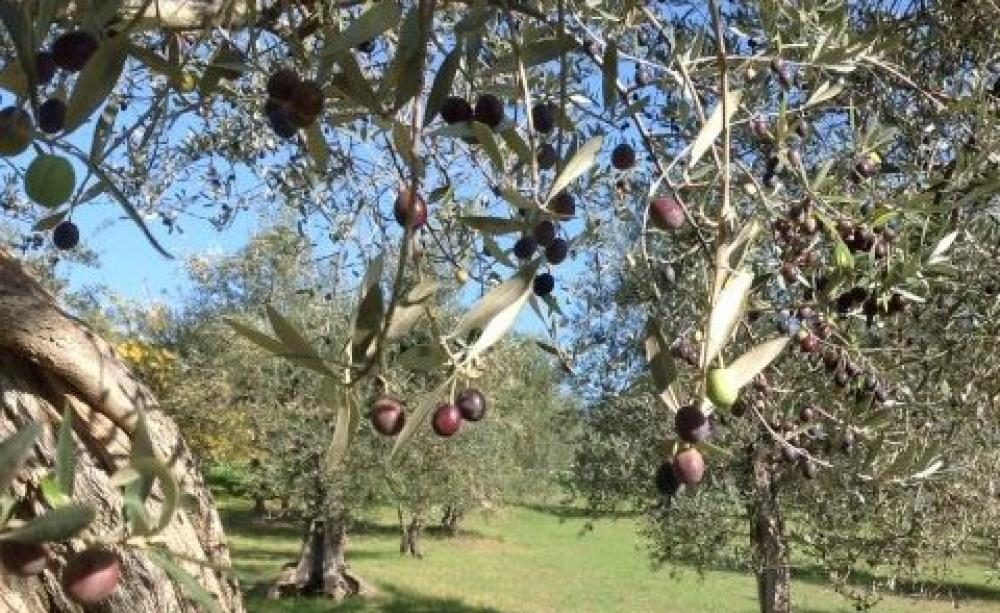
For about six weeks every autumn, Umbria's olive groves are picked and pressed, and the year's first oil goes straight from the mill to the table. Italians call it olio nuovo. If you have only ever tasted oil that spent months in a bottle, the first spoonful is a surprise.
What Olio Nuovo Actually Is
Olio nuovo is simply the newest extra virgin olive oil: pressed within hours of picking, often bottled unfiltered, and sold in the first weeks after the harvest. It is vivid green, sometimes cloudy with fine olive solids, and it smells of cut grass, artichoke and green tomato leaf.
The taste is the part people remember. Fresh oil is amaro (bitter) and piccante (peppery), and a good one makes you cough a little at the back of the throat. That is not a flaw. It comes from the polyphenols that give young oil its character, and Italians treat the cough as a sign the oil is good. Those sharp edges soften over the following months, which is why the new oil is a seasonal thing worth planning a trip around.
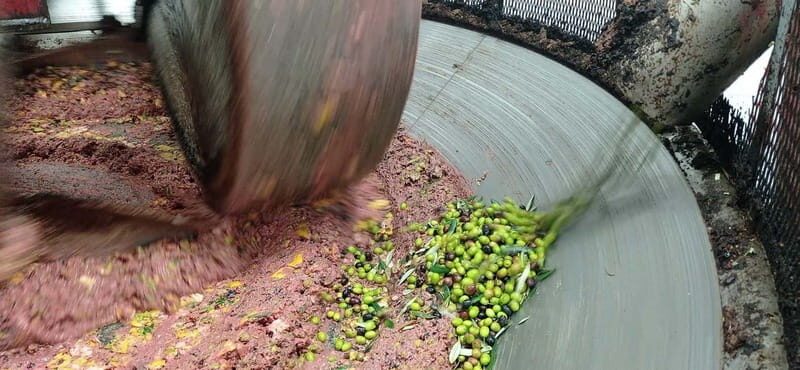 At the mill, olives are crushed into a paste within hours of picking. The oil follows shortly after.
The Umbrian Harvest
Umbria is one of Italy's most respected oil regions, with a regional DOP and its own sub-zones, including Colli Assisi-Spoleto, Colli Martani and Colli del Trasimeno. The groves are mostly small and hillside, planted largely with Moraiolo, Frantoio and Leccino, the varieties that give Umbrian oil its green, herbal, pepper-forward profile.
Picking usually runs from mid-October into late November, depending on the year, the altitude and the grower. Many families still harvest by hand with rakes and nets, then take the olives to the local frantoio (mill) the same day. By November the silver-leafed groves around the Niccone Valley are full of pickers, and the mills are running.
Dates: October 17 – November 15, 2026 (29th edition)
What: Working olive mills across Umbria open their doors for tours and new-oil tastings, with food and cultural events around them.
Festa dei Frantoi, Campello sul Clitunno: November 8, 2026 (mill visits and olio novello tastings)
Tip: The programme is run town by town and can change. Check the official page before you drive: umbriatourism.it.
How to Taste It
The classic way is the simplest. Toast a slice of unsalted Umbrian bread, rub it with a cut clove of garlic, add a pinch of salt and pour the new oil on generously. That is bruschetta, or fettunta as it is called in neighbouring Tuscany, and it is the standard way to judge a new pressing.
Beyond toast, olio nuovo is best on things that let it speak: a bowl of warm white beans or farro soup, grilled bitter greens, roasted chestnuts and squash, or a simple slice of local pecorino. Use it raw, as a finishing oil, and save the cooking oil for cooking. When you taste at a mill, take a small amount in the palm of your hand or a little cup, warm it, smell it, then sip with some air so it reaches the back of the throat.
Visiting a Mill
A working frantoio in harvest season is loud, a little chaotic and very rewarding. You can watch olives washed, crushed and separated, then taste oil that was olives that morning. Many mills sell directly, often in tins or dark bottles, which is how fresh oil should be stored.
Mill hours follow the harvest, not a fixed schedule, so ring ahead or go during the Frantoi Aperti dates when visits are organised. If you are staying at Casa Luna, ask us before you arrive and we will point you toward mills worth the drive. For the largest concentration of events, the towns around Trevi, Spello and Campello sul Clitunno are the heart of Umbrian oil country, roughly 90 minutes from the villa, and make an easy full-day trip.
Casa Luna's kitchen is made for exactly this. Buy a tin at the mill, then cook with it all week. Pack bottles in checked luggage, wrapped well, and keep them cool and dark until you drink them.
Pairing It With EuroChocolate
The harvest overlaps neatly with EuroChocolate in Perugia (November 13–22). A November trip can start with mills and bruschetta in the first half of the month and finish with chocolate in Perugia, with truffle season, new wine releases and chestnuts in between. There are few better weeks to see how seriously Umbria takes its food.
Why November Works
November in the Niccone Valley is cool and soft, typically 10–16°C (50–61°F), with crisp mornings and mist in the valley. It is also quiet. The hill towns are yours, restaurant tables are easy, and the villa is warm, with central heating, a heated pool and a full kitchen. The landscape is gold and silver instead of green, and the oil is at its freshest.
The Bottom Line
If you want one reason to see Umbria outside summer, olio nuovo is a strong one. It is local, seasonal, cheap to enjoy and impossible to get the same way anywhere else. Come between mid-October and mid-November, visit one mill, eat one slice of bruschetta, and you will understand what the fuss is about.